Sale Price:
$3.99
Original Price:
$18.99
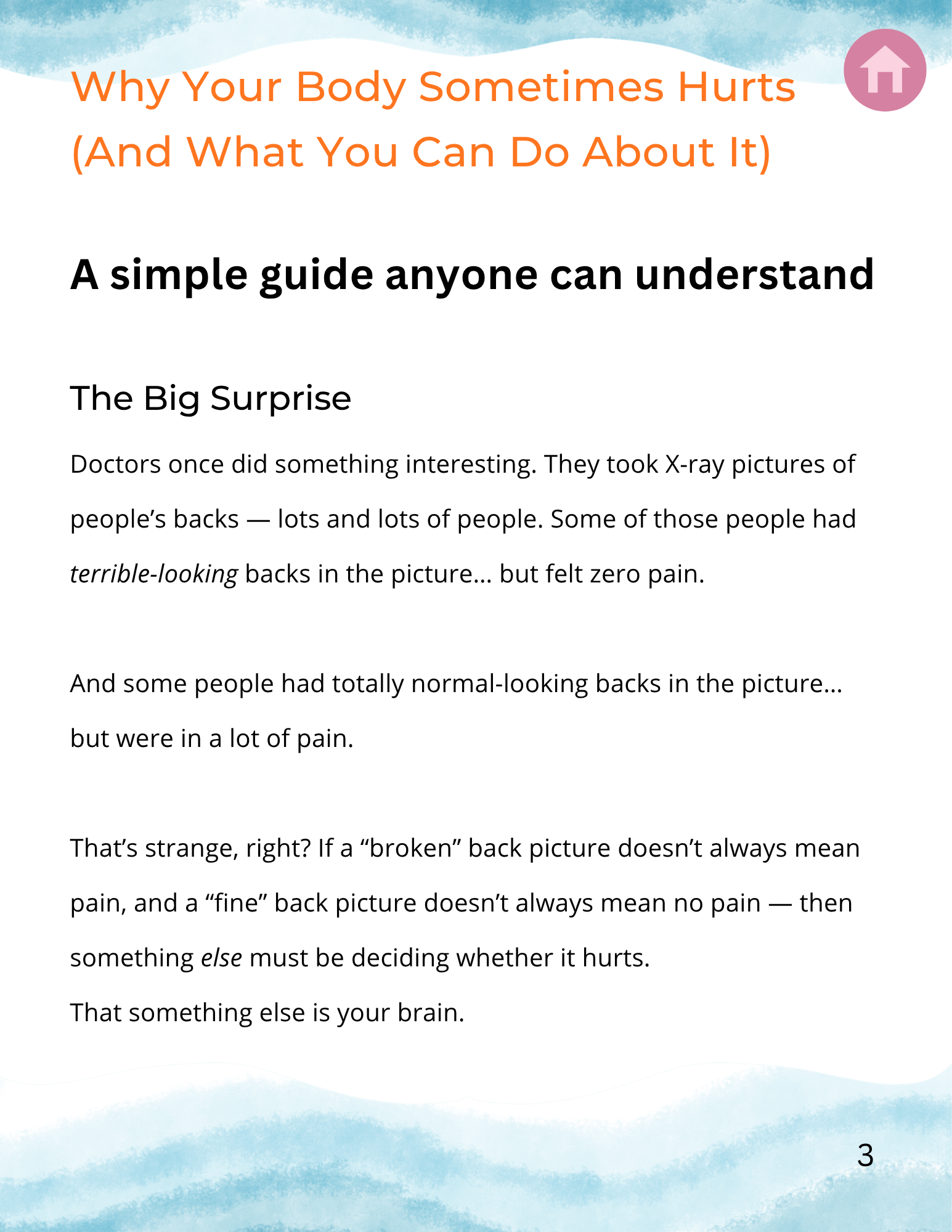
Have you ever wondered how much your body may be telling you — without you realizing what the signs actually mean?
Some important health problems can develop without obvious symptoms, while others can appear in ways we don’t expect. Knowing a few simple medical facts can help you understand your body, recognize warning signs, and know when something deserves attention.
12 Medical Facts Everyone Should Know turns useful health information into simple, visual explanations you can actually remember.
Inside, you’ll learn about:
• Why liver problems can develop without pain
• When a sore throat may not need antibiotics
• How heart attack symptoms can look different in women
• Why a cough can continue for weeks after an illness
• How to tell whether pain may be coming from your teeth, ears, head, or sinuses
• Why high blood pressure can be dangerous without symptoms
• What your appendix actually does
• Why stress can trigger temporary hair loss
• What causes varicose veins and when they need attention
• Common signs of thyroid problems
• Why migraines are more than ordinary headaches
• How sleep affects your brain, hormones, immunity, heart, and overall health
You don’t need to memorize everything about medicine.
Sometimes one small fact can help you recognize that something isn’t right — and act when it matters.
Have you ever wondered how much your body may be telling you — without you realizing what the signs actually mean?
Some important health problems can develop without obvious symptoms, while others can appear in ways we don’t expect. Knowing a few simple medical facts can help you understand your body, recognize warning signs, and know when something deserves attention.
12 Medical Facts Everyone Should Know turns useful health information into simple, visual explanations you can actually remember.
Inside, you’ll learn about:
• Why liver problems can develop without pain
• When a sore throat may not need antibiotics
• How heart attack symptoms can look different in women
• Why a cough can continue for weeks after an illness
• How to tell whether pain may be coming from your teeth, ears, head, or sinuses
• Why high blood pressure can be dangerous without symptoms
• What your appendix actually does
• Why stress can trigger temporary hair loss
• What causes varicose veins and when they need attention
• Common signs of thyroid problems
• Why migraines are more than ordinary headaches
• How sleep affects your brain, hormones, immunity, heart, and overall health
You don’t need to memorize everything about medicine.
Sometimes one small fact can help you recognize that something isn’t right — and act when it matters.

 Image 1 of 5
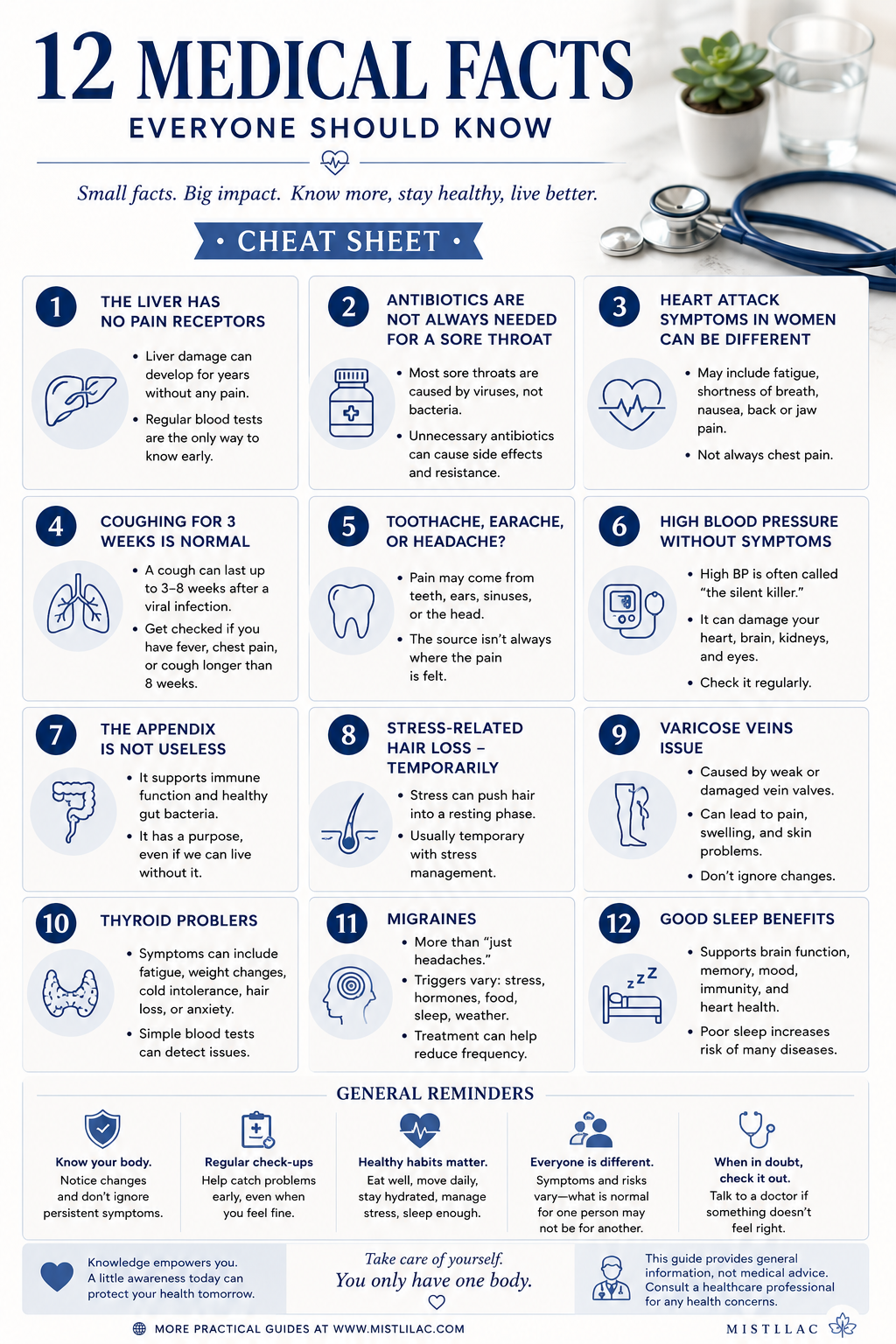 Image 2 of 5
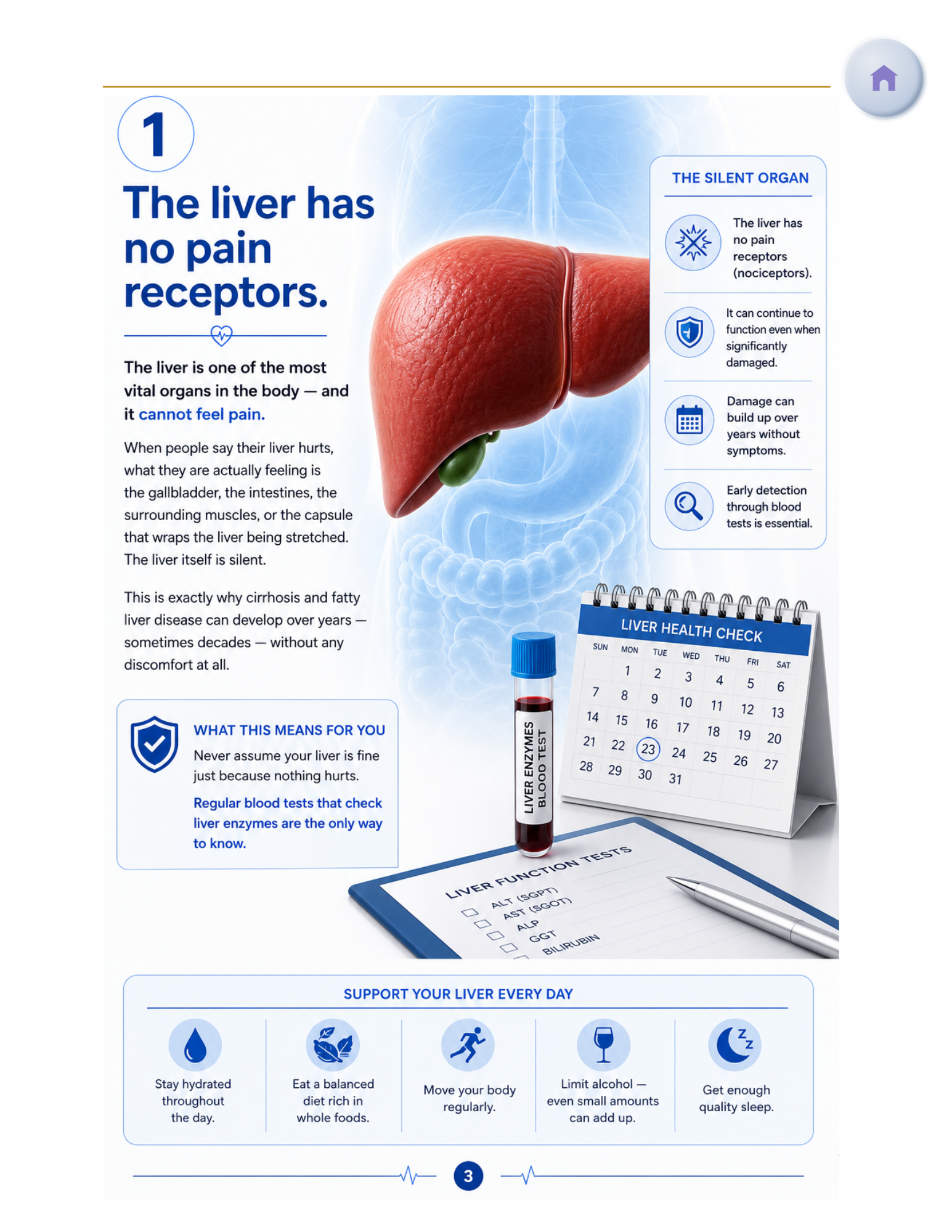 Image 3 of 5
 Image 4 of 5
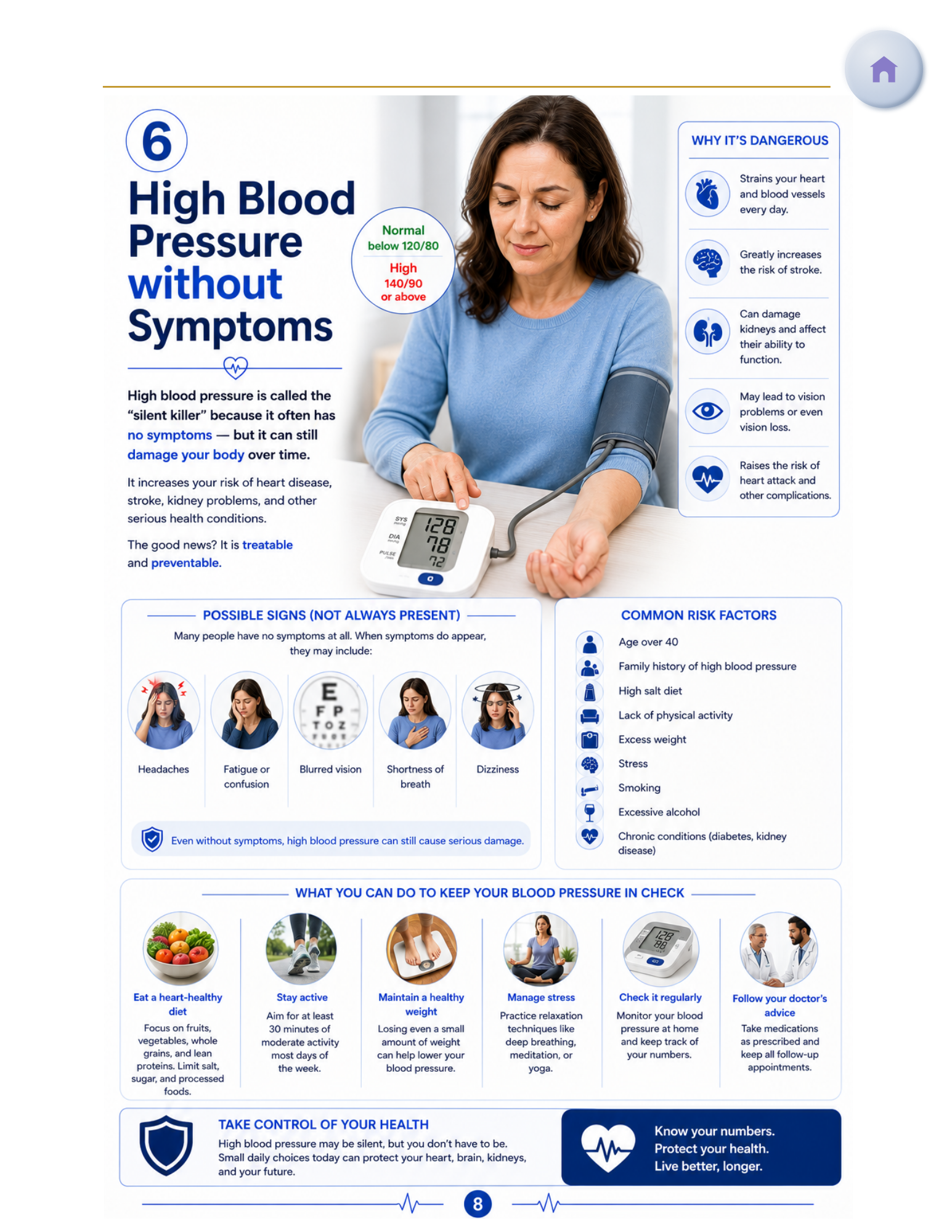 Image 5 of 5